Wattage Wars
The e-bike world is buzzing again. DJI's Avinox has just dropped the M2S motor, and the headline number is hard to ignore: 1,500 watts. Half the community is losing their minds with excitement, and honestly — fair enough. The other half is raising an eyebrow and asking the obvious question: do we actually need this?
I've been riding e-MTBs long enough to remember when 250W felt revolutionary. Now we're casually talking about motors that punch out six times that figure. So let's have an honest conversation about where the industry is headed, and what it means for those of us who just want to go ride our bikes.
What the Avinox M2S Actually Is
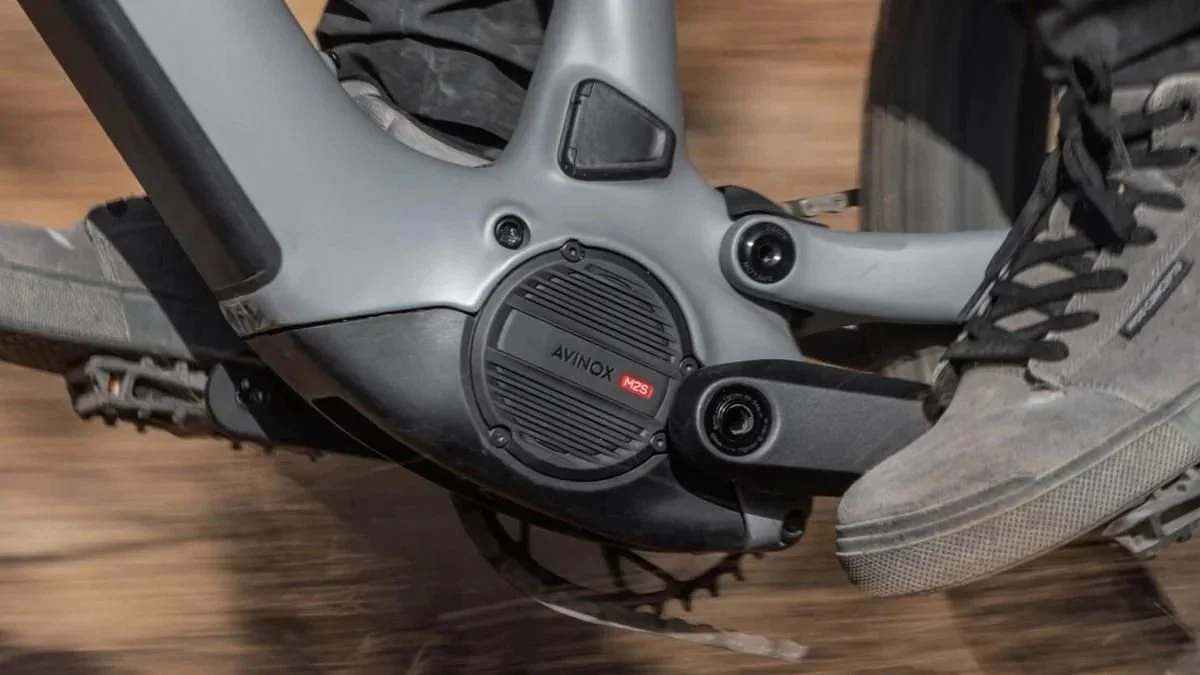
To be clear — this isn't vaporware. The new Avinox M2S is a genuinely impressive piece of engineering. It delivers up to 1,500W of peak power and 150Nm of torque, all while barely changing in size or weight compared to its predecessor. DJI's engineers have used flat copper wire winding, helical gears with dual-engagement design, and a brand new 4680 battery cell format borrowed straight from the automotive world. The result is a motor that is measurably more efficient, quieter, and more refined than what came before.
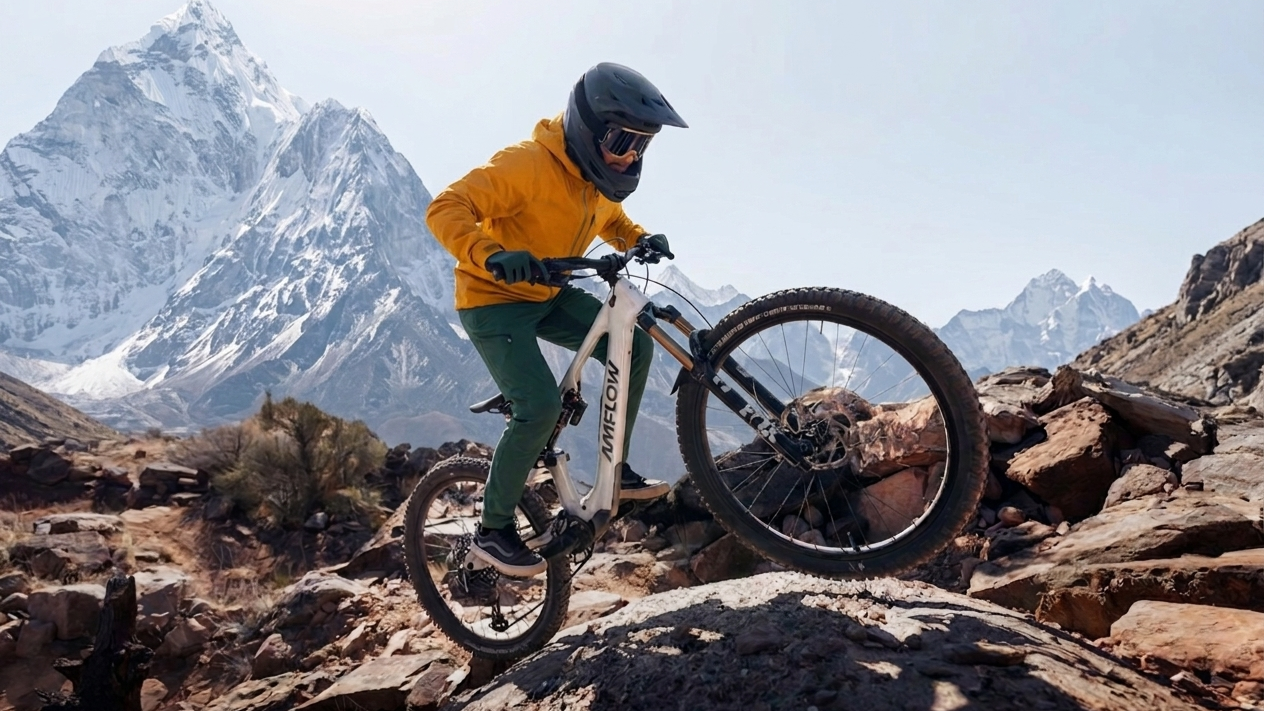
Riders who've spent time on it describe a completely transformed climbing experience — technical rock slabs, steep root sections, tight switchbacks — all tackled at speeds that would have been impossible before. That's genuinely exciting, and I'm not going to pretend it isn't.
The Arms Race Nobody Asked For
But here's where I want to pump the brakes a little.
The e-MTB motor market has become an arms race. Every generation, the numbers go up. More watts, more newton metres, bigger spec sheets. And every time a new benchmark is set, the conversation resets around chasing the next one. It's the same story we've seen in smartphones, cars, and gaming hardware — raw performance figures as marketing, whether or not they translate to meaningful real-world improvements for the average rider.
The E-Mountainbike Magazine review of the M2S makes a point worth sitting with: even their team of expert testers concluded that for 90% of riders, the sweet spot is actually below 1,000 watts. The M1 — the previous generation — already shifted so many benchmarks that plenty of riders never came close to exploring its limits. Were those riders asking for 50% more on top? Probably not.
There's also a less glamorous side to all this power: consumption. Ride the M2S consistently in Turbo or Boost mode and you can drain an 800Wh battery in around 90 minutes. That's impressive in the sense that you'll cover serious ground in that time — but it's also a preview of what happens when the priority is raw output over real-world usability.
The Thing That Actually Matters: Battery and Range
And this is the part of the conversation I don't think gets enough attention.
No amount of peak watts will fix the frustration of a dead battery mid-ride. I've been there, and so have you — that moment when the assist cuts out, you're still 10km from the car, and suddenly a 25kg bike feels like a punishment. No software update, no torque figure, no clever mode switching will save you at that point. You're just grinding.
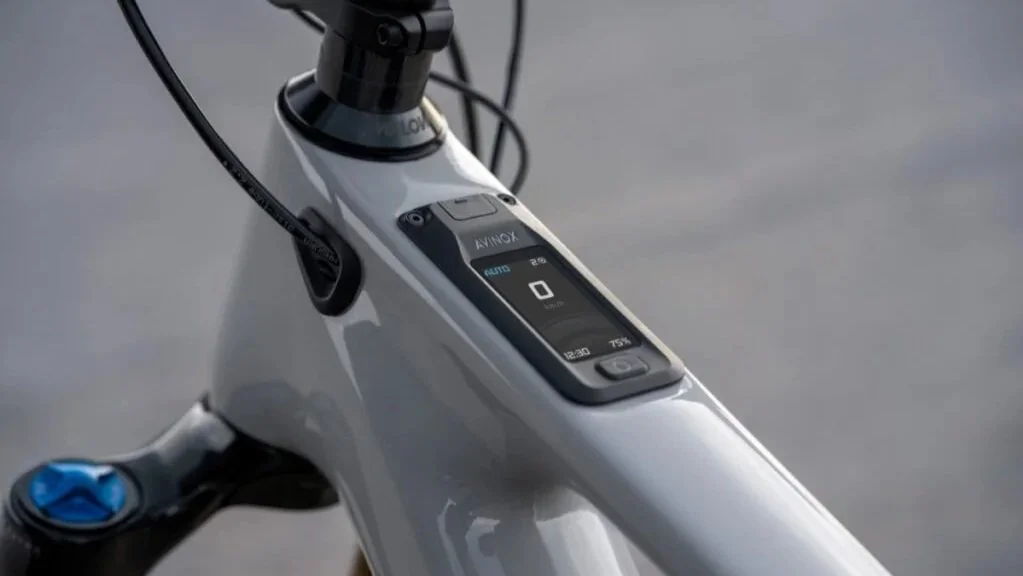
Battery technology, range, charging speed — these are the factors that determine whether your ride actually goes the way you planned. And frustratingly, they're not the things that dominate the headlines. A motor doing 1,500W is a number that photographs well in a press release. "Our new 800Wh battery charges to 80% in 35 minutes" doesn't generate the same Twitter thread energy, even though it arguably matters more to most riders on most rides.
The Avinox system actually does make genuine strides here — the new FP700 battery with its 4680 cells is legitimately impressive, and the 12A fast charger is quick. But the irony is that more power demands more from the battery, not less. The M2S can only sustain its full 1,500W continuously when paired with that specific FP700 battery. Use a different pack and you're capped. The motor creates new dependencies on the battery, rather than reducing them.
Range anxiety is the single biggest barrier to people getting more from their e-bikes. Not power anxiety. Nobody has ever cut a ride short because their motor wasn't exciting enough. But dead batteries? Every week, somewhere, on every trail network in the world.
Innovation Is Good — But Let's Be Honest About What We're Optimising For
I want to be clear: I support what Avinox is doing. I support innovation. A company willing to bring genuinely new hardware — new cell formats, new winding technology, real efficiency gains — to a market that often just shuffles existing components deserves credit. The M2S is a serious piece of engineering, not a marketing stunt.
And more power, done well, does open up new possibilities. Riders with limited mobility, people tackling genuinely extreme terrain, those who want to extend into longer days without sacrificing assist — real power matters to real people.
But the conversation we should be having alongside the wattage wars is this: what would it look like if the brightest minds in the industry put the same energy into doubling range, halving charge times, or making batteries that last ten years instead of four? What if the next generation of motors prioritised getting smaller, lighter, and more efficient — enabling the assist to disappear more naturally into the ride — rather than adding more zeros to the spec sheet?
Because the riders who would benefit most from this technology are not the ones who need 1,500W to clean a rock garden. They're the “Sunday riders” who need to know they'll make it home. The weekend gravel tourers calculating whether they can squeeze in one more valley. The newer riders who want an assist that feels natural, not one that overwhelms them.
Where I Land
More power? Sure, I'll take it. It's impressive, it's fun, and when it's as well-controlled as the Avinox M2S appears to be, it's genuinely transformative on super-technical terrain.
But if I'm being straight with you: give me the bike that goes further before I need to stop. Give me the battery that I can top up in 30 minutes at a café with an USB-C. Give me range I can trust, in any weather, on any terrain, without doing maths in my head on the descent.
Peak watts will never replace the frustration of watching your assist die. And until range is truly solved, every extra watt is just spending down the battery faster.
The best e-bike isn't the most powerful one. It's the one that's still running when you get home.
See you on the trail!